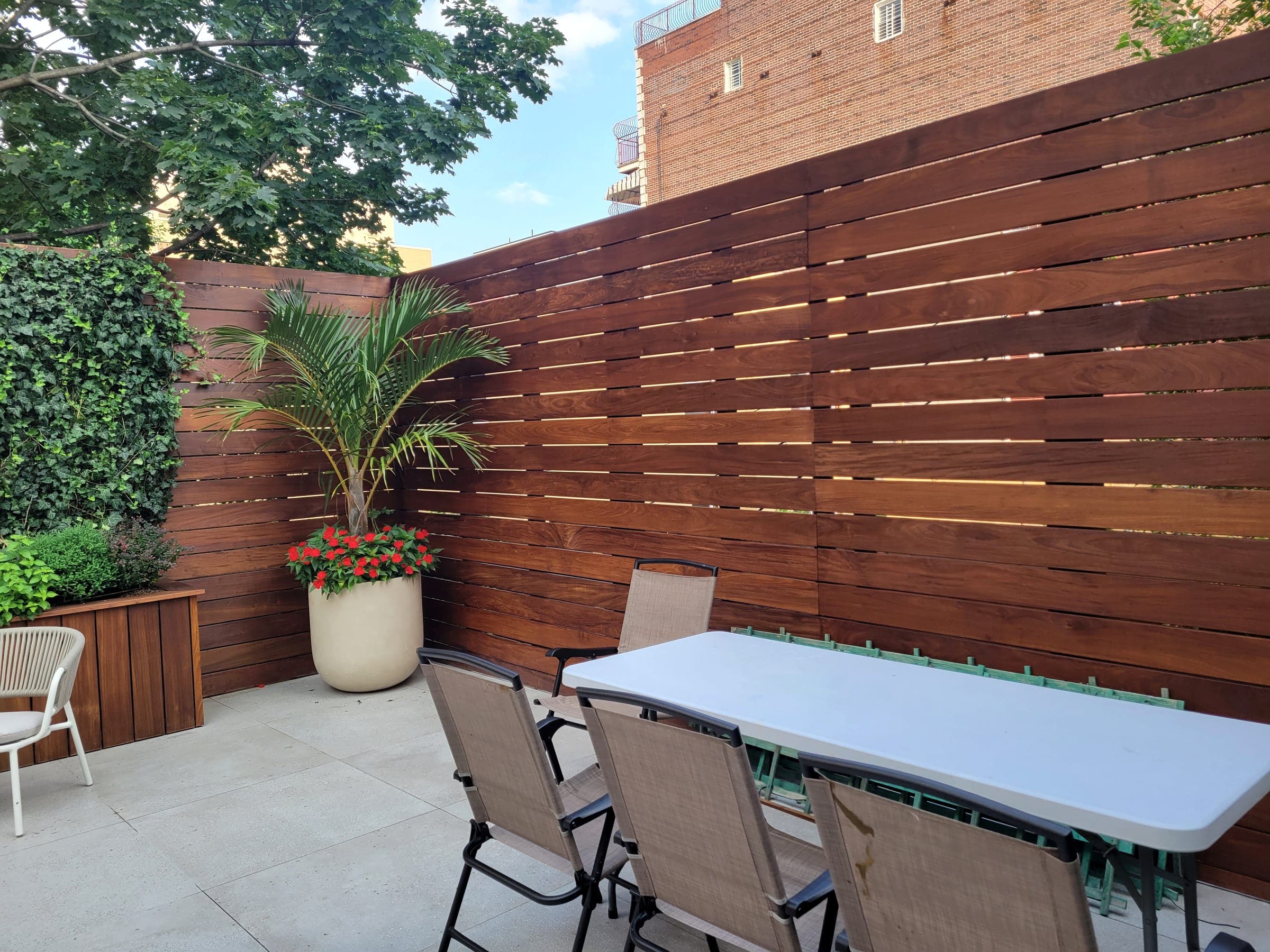
A NYC brownstone yard is a 20-foot-wide room surrounded by other people’s buildings. The light is short, the neighbors are close, and the soil is usually tired. The good news: there are eight or nine moves that work in almost every yard, and once you see them stacked, the design starts feeling obvious.
1. The horizontal IPE privacy wall
The single highest-leverage move in any brownstone yard. A 6- to 7-foot horizontal IPE fence along the two long sides warms the yard visually, blocks the sightlines from upper-floor neighbors, and gives every other element a frame to read against. IPE weathers silver; cedar is a budget alternative that does the same job for fewer years.
2. Bluestone or porcelain underfoot, edge-to-edge
The ground plane sets the tone for everything above it. Bluestone reads traditional and grounded; porcelain pavers (24×24 or 24×48) read modern and stay cleaner. Run the hardscape edge-to-edge across the yard, not floating in a frame of mulch — yards look bigger that way, and the perimeter becomes planting beds instead of dead space.
3. A pergola at the back third
Most brownstone yards sit in shade at the back (closer to the neighbors’ buildings) and in more sun at the front (closer to the parlor floor). A cedar or IPE pergola at the back third defines a dining or lounging room and gives lighting and ceiling fans somewhere to live. It also reads as a destination from the parlor windows.
4. Built-in benches against the long walls
Two-foot-deep built-in benches against the IPE privacy walls do three things at once: extra seating without filling the yard with chairs, a visual base for the wall, and concealed storage for cushions, garden tools, or kids’ toys. We build them in IPE or cedar, matching the wall.
5. A dining table sized for six, not twelve
The most common over-spec in brownstone yards is a dining table. A 6-person table reads generous; a 10- or 12-person table eats the yard. Most families dine outside in twos and threes — the table is sized for the average use, not the dinner party. Add folding chairs in the bench when a bigger table is needed.
6. Layered planting for short light
Three layers, almost always: ground cover (Pachysandra, vinca, sweet woodruff), mid (ferns, hostas, hellebores, heuchera), and back (oakleaf hydrangea, Japanese maple, climbing hydrangea on the walls). Skip the “meadow” or “cottage” look — both want sun. The brownstone palette is woodland.
7. Lighting on three zones, all dimmable
Pergola task lighting (over the dining table), path / step lighting (low along the hardscape edges), and accent / wash (uplighting on a tree, downlighting on the privacy wall). Each on its own dimmer, all wired before the hardscape goes down. Most brownstone yards live at night more than they live during the day; lighting is what makes that work.
8. A gas fire feature, not wood
Gas fire pits and fire tables earn their place in a brownstone yard. They’re instant, clean, no smoke into the neighbors’ windows, and they extend the shoulder seasons by two months on each side. Wood-burning isn’t worth the FDNY permit hassle or the landlord/co-op fight.
9. The optional kitchen
If you cook outside, build the kitchen in. A 6- to 8-foot built-in with a grill, prep counter, and undercounter fridge slots cleanly along one of the IPE walls without dominating the yard. Plumbing and gas have to be routed before the hardscape goes down — this is a design-phase decision, not a year-three add.
Common questions
- How big is a typical Brooklyn brownstone backyard?
- Most are 20 to 25 feet wide and 30 to 60 feet deep. Park Slope and Carroll Gardens tend to run deeper. Cobble Hill and parts of Brooklyn Heights are tighter — sometimes only 20 feet deep. We design around the actual dimensions, not the assumed ones.
- What grows in a north-facing Brooklyn yard?
- More than people think. Ferns (Japanese painted, autumn, ostrich), hostas, hellebores, heuchera, oakleaf hydrangea, and Japanese forest grass all thrive on three to four hours of sun. Azaleas and Japanese maples work in the partial-sun corners. Avoid full-sun lovers like lavender, sage, and most ornamental grasses.
- Can I have a fire pit in a NYC backyard?
- Gas fire pits and fire tables are unrestricted in most NYC residential yards. Wood-burning fire pits require a permit from FDNY and most landlords/co-ops disallow them. We default to gas — easier to live with anyway, no smoke into the neighbors’ windows.
- Will I need a permit?
- For most rear-yard work — hardscape, plantings, fencing under 8 feet, lighting, irrigation, garden walls under 4 feet — no DOB permit is needed. Permits kick in for: building structural attachments, electrical work beyond extending an existing circuit, gas lines, and anything that touches the rear elevation of a landmark-district building.