Brooklyn yards and rooftops,
brownstone-tuned.
MintScapes designs and builds rear-yard gardens, roof decks, outdoor kitchens, and townhouse extensions across Brooklyn. The brownstone block is the unit we know best — the light it gets, the neighbors it has, the way it’s built.
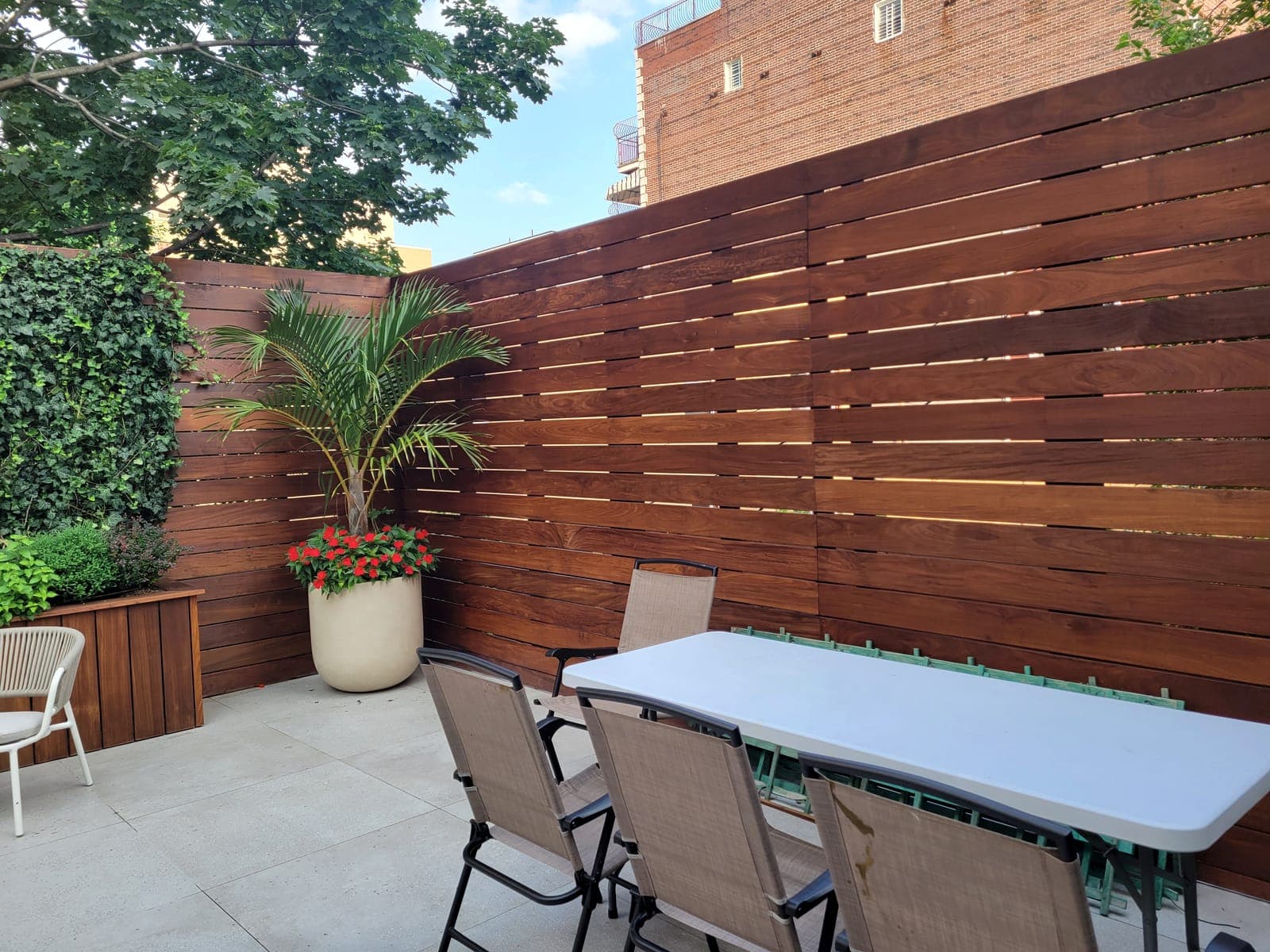
A Brooklyn brownstone yard is a 20- to 25-foot-wide rectangle behind a four-story building, with neighbors on three sides. The light is short — three to five hours most of the year, less in winter, more for east-facing lots. The soil is usually clay-heavy and exhausted. The privacy comes from how the yard is laid out, not how high the fence is.
We’ve worked across most of the brownstone neighborhoods. Each one has a slightly different problem to solve: deeper lots in Park Slope, tighter lots in Cobble Hill, sunnier yards in Bed-Stuy, more landmark scrutiny in Brooklyn Heights. The design starts with what the block actually gives you, not with what a portfolio looks like.
What changes block to block.
The brownstone block is the unit; the differences between neighborhoods are real.
Park Slope
Brownstone rear gardens with mature trees, deep lots, north-facing light constraints.
Cobble Hill
Tight blocks, narrow yards, landmark district. Privacy walls are the move.
Carroll Gardens
Wider yards, established perennial beds. Hardscape refreshes are common.
Boerum Hill
Mixed brownstone and townhouse. Roof decks are increasingly common here.
Fort Greene
Big yards by Brooklyn standards. Outdoor kitchens and pergolas pencil out.
Clinton Hill
Beautiful yards, often shaded. Planting palettes built for low light.
Brooklyn Heights
Landmark district. Rear-yard work is straightforward; roof decks need careful navigation.
Bed-Stuy
Generous yards, sun. Lots of upside on hardscape and dining design.
DUMBO / Vinegar Hill
Penthouse terraces, loft roof decks. Wind exposure is the design driver.
Three services that fit the brownstone block.
Brownstone backyards
Rear-yard design and build. The bulk of our Brooklyn work. Privacy walls, hardscape, dining, planting beds shaped to the light the yard actually gets.
See the serviceRooftop decks
Townhouse and brownstone rooftop additions. Structural review with your engineer, DOB coordination, build on top of the existing roof.
See the serviceOutdoor kitchens
Built-in grills, refrigeration, prep counters, and the gas and electric to make them last. Common addition to backyard redesigns.
See the serviceWhat clients in Brooklyn ask.
- Where in Brooklyn do you work?
- Across the brownstone neighborhoods primarily — Park Slope, Cobble Hill, Carroll Gardens, Boerum Hill, Brooklyn Heights, Fort Greene, Clinton Hill, Bed-Stuy, Crown Heights, Prospect Heights, Sunset Park. We work in DUMBO and Williamsburg on rooftop projects. We'll travel to anywhere in the borough for the right project.
- Do you handle Landmarks (LPC) work in Brooklyn?
- For rear-yard projects in landmark districts (Cobble Hill, Brooklyn Heights, much of Park Slope), LPC is usually only involved if the rear elevation of the building is touched. We'll tell you on the walk-through whether your project triggers a filing, and we'll handle the package with your architect or one we refer.
- Do you do work in landmark districts?
- Yes, regularly. Cobble Hill, Brooklyn Heights, Carroll Gardens (parts of it), Park Slope, and Fort Greene are all districts we work in. The constraint is mostly cosmetic — visible-from-the-street changes need LPC sign-off. Rear-yard work is usually unaffected.
- How much does a typical Brooklyn brownstone backyard cost?
- Most Brooklyn brownstone backyards run $50K–$180K all-in. A clean refresh — repointing pavers, refreshing privacy walls, adding a planting plan — can come in under $50K. A full redesign with new hardscape, IPE privacy walls, built-in beds, and an outdoor kitchen lands in the $100K–$200K range.
- How long do Brooklyn projects take?
- From first call to handed-over space, four to nine months on a typical brownstone backyard. Roof decks take longer — six to twelve months — because of structural review and DOB filings. Build itself is usually six to twelve weeks on-site, scheduled around the building's access rules.